


When I first traveled to Argentina for work with a large tech company, I did what I always do as a Black woman in a new city: I looked for us.
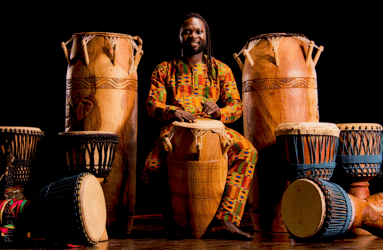
In Brazil, we are everywhere. The rhythm of the diaspora is alive in Bahia, in Rio, in the fast steps of Samba, the seasoning of food, and the drums that remind us of the continent we carry in our blood.
But in Córdoba, where their offices sit tucked between glass towers and sidewalk cafés, I saw something I had never experienced before: complete absence.
No Black people in the office.
None in the cafés.
None on the buses.
None in the parks.
None.
So I asked.
“Where are the Black Argentines?”
I was met with the same line, over and over:
“We didn’t really have many.”
“They disappeared.”
“There were no slaves here.”
But history doesn’t vanish.
History leaves fingerprints.
It leaves rhythm.
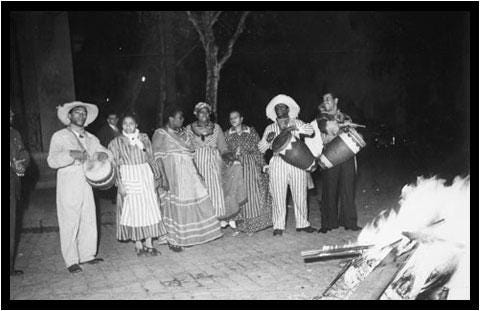
In Buenos Aires, you can still hear it if you know where to stand.
The Sunday candombe drums in Plaza Dorrego.
The old communal courtyard on Calle Defensa, where Afro-Argentine families once lived, has been redesigned into boutique shops, with no mention of who danced there first.
A silent plaque inside a quiet church in Monserrat, honoring Black brotherhoods who kept altars, songs, and resistance alive.
The traces are faint, but they are there.
Because Black Argentines were there.
And then they were made to disappear.
The Slow Disappearance in Argentina
By the late 19th century, nearly one-third of the population of Buenos Aires was of African descent. Afro-Argentines fought in wars of independence, worked in government offices, invented the tango, influenced cuisine with asado barbecues, and contributed to the development of the language and culture.
Then the “whitening project” began.
European immigration was subsidized.
School curricula rewrote the story of the nation without us in it.
After the 1871 yellow fever epidemic struck poor Black neighborhoods hardest, redevelopment paved over the communities entirely. The Prime Minister at the time did nothing to help the sick and dying.
And then the government stopped counting Afro-Argentines, African ancestry categories were removed from the census, and the nation began to say they had never been there.
Erasure doesn’t require chains.
Just silence, paperwork, and time.
The Fast Version in the United States
Now, in 2025, the United States is dismantling the federal structure built to ensure Black visibility and opportunity.
- Black and women leaders were removed from key posts, quietly, with bureaucratic language.
- Federal contractors instructed to drop affirmative action or lose funding.
- Public broadcasters and cultural institutions are ordered to strip “identity-based content.”
- DEI offices dissolved across government agencies.
The justification is “merit.”
The effect is memory loss.
The goal is neutrality with no witness.
To be clear, there is no official percentage of Black senior officials removed in 2025. The administration also removed race and ethnicity data from the federal workforce reporting portal this spring.
What we can document is a wave of high-profile removals, including General C.Q. Brown Jr., Chair of the Joint Chiefs of Staff, and Carla Hayden, the first Black and first woman to serve as Librarian of Congress. There have been significant cuts in agencies with large Black workforces, such as HUD and the Department of Education. The pattern is visible even if the government refuses to publish the numbers.
Removing DEI does not just end programs; it also impacts the broader community.
It removes the:
- Language for naming discrimination
- People trained to intervene
- Records of who contributed to this country
- Pathways for leadership and influence
This is an erasure done in real-time.
Not by epidemic, but by the administrative delete key.
What We Are Meant to Learn from Argentina
When a nation stops naming a people, teaching their story, or acknowledging their labor, it becomes easier to pretend they were never foundational.
First, the data goes.
Then the narrative.
Then the memory.
Then the body.
It doesn’t happen overnight.
It happens deliberately and concisely.
What Comes Next Depends on Us
If we want to avoid Argentina’s silence becoming our future, then our task is not just to resist erasure. We must archive ourselves loudly.
- Build parallel ladders. Mentorship, funding circles, and cultural memory networks that exist outside federal policy.
- Support Black cultural institutions. Public history is fragile. Community history is durable.
- Document everything. Save curriculum, oral histories, community knowledge, and family records.
- Refuse the lie that silence equals unity.
Silence has always served the powerful.
Erasure is permanent.
Memory gets handed down for generations.
We have to choose memory every day.
And Let Me Be Plain.
Black people do not disappear.
We are not erasable ink.
We are the backbone, the root system.
If a nation stops teaching our history, we must teach it ourselves.
If a state stops counting us, we will count each other.
If institutions close the doors we built, we will build new ones with our own names on the deeds.
We are not waiting to be acknowledged.
We are remembering out loud.
And memory is a form of resistance.
We were here. We are here. And we are not going anywhere.
Author Bio
Nikki Rosenstark is a writer, strategist, and cultural memory worker documenting the living, breathing history of the African diaspora. She writes about identity, power, and the quiet ways erasure happens — and how we undo it.
Tags: race, diaspora, history, culture, memory, politics, decolonization.
This article was originally published in Women Write Publication, a growing, strong community built by women for women. BHTNH has republished it with permission of the author.
 Preserve Black History in New Hampshire