


Ona Judge Staines Mural





The Unveiling Ceremony
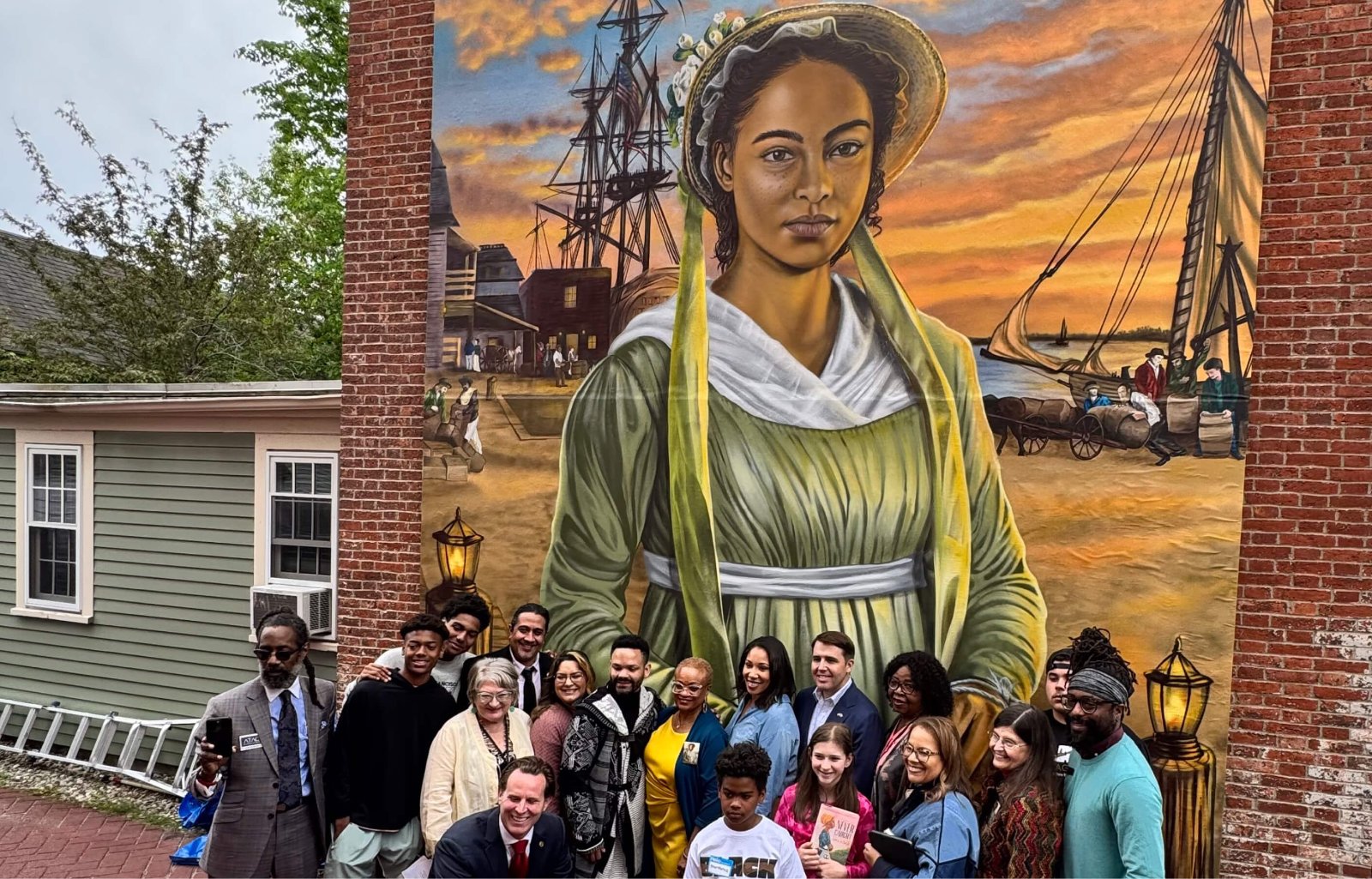
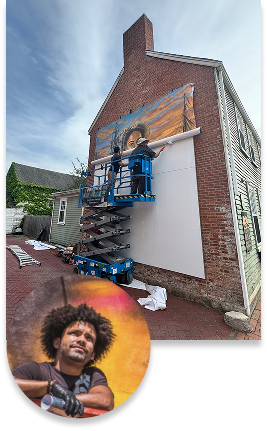
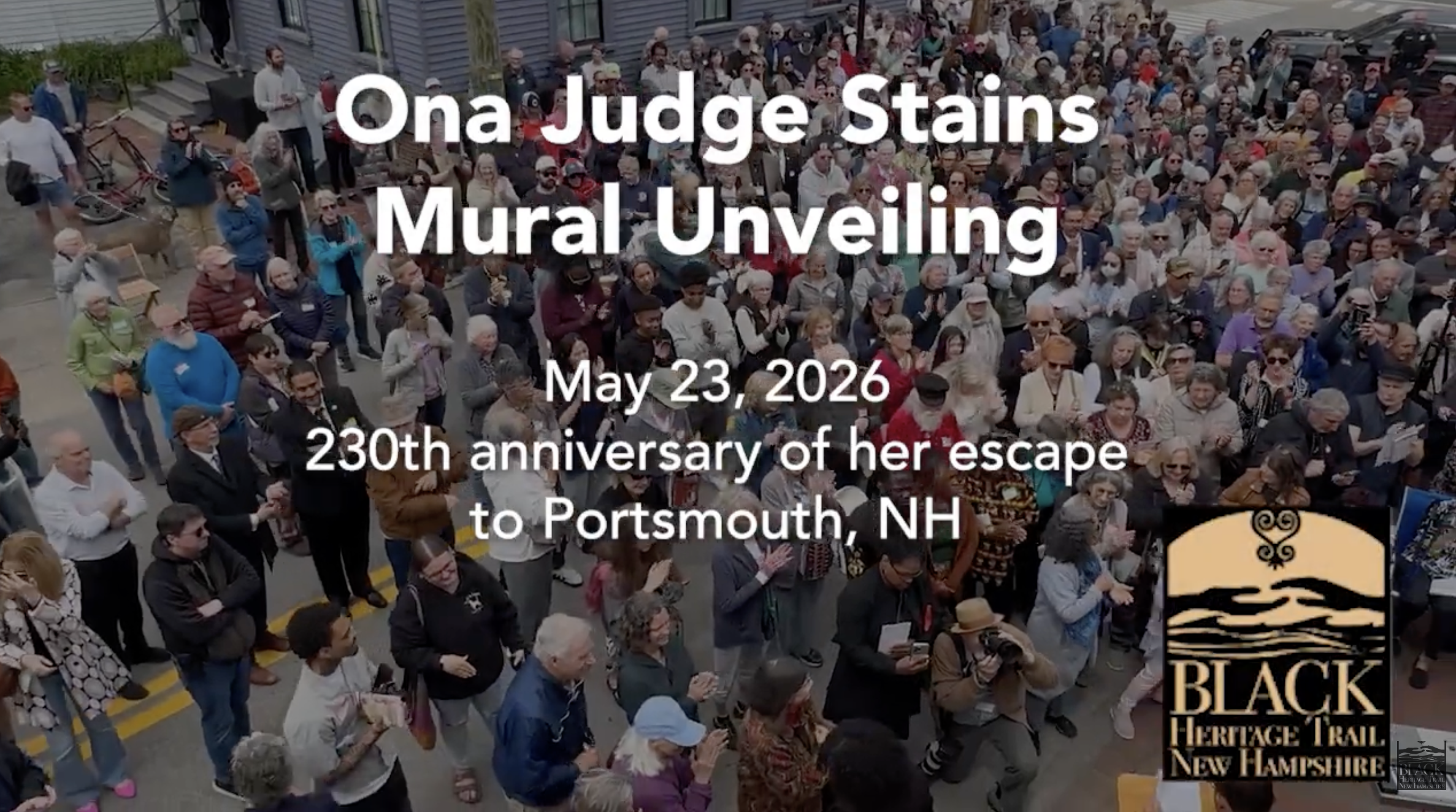
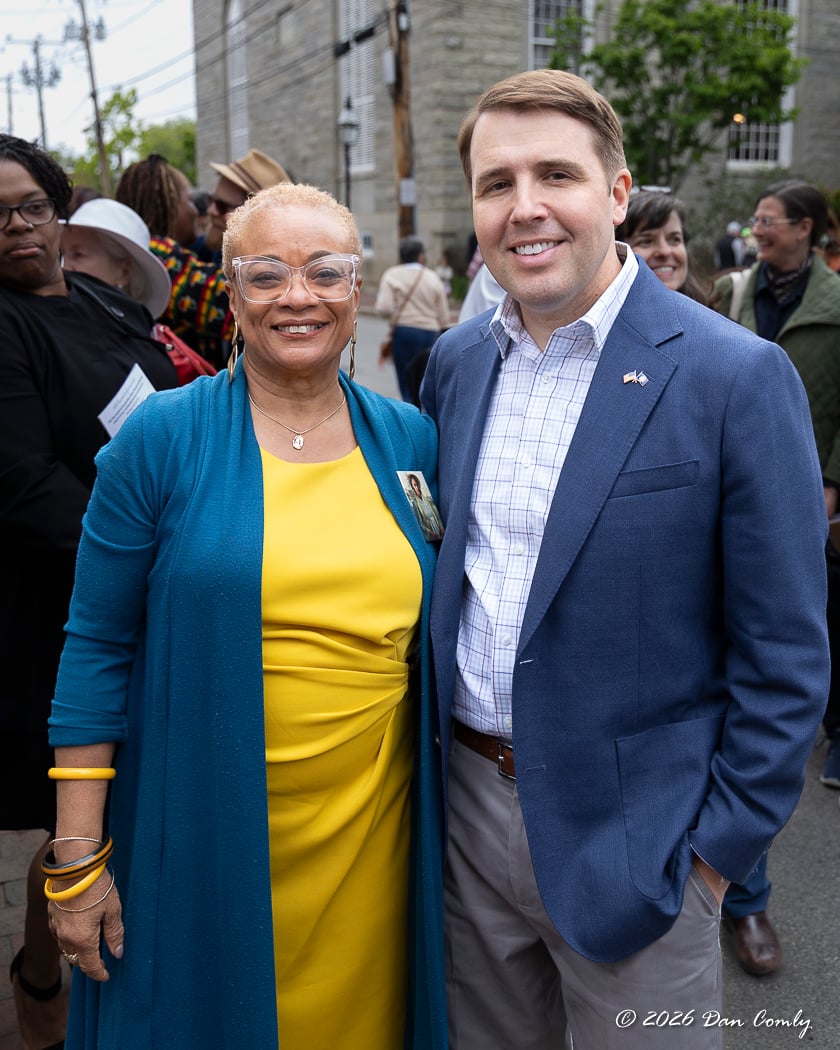
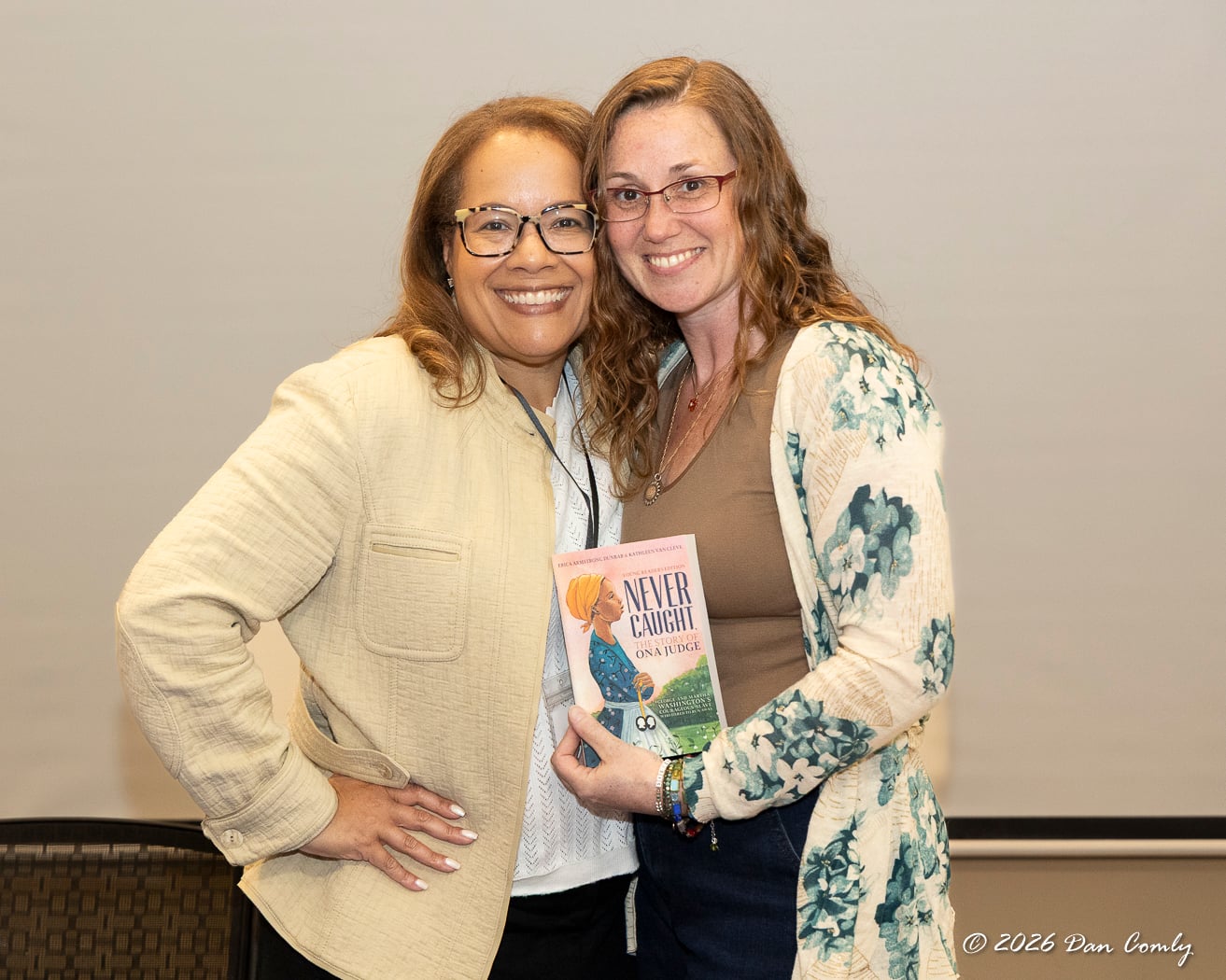
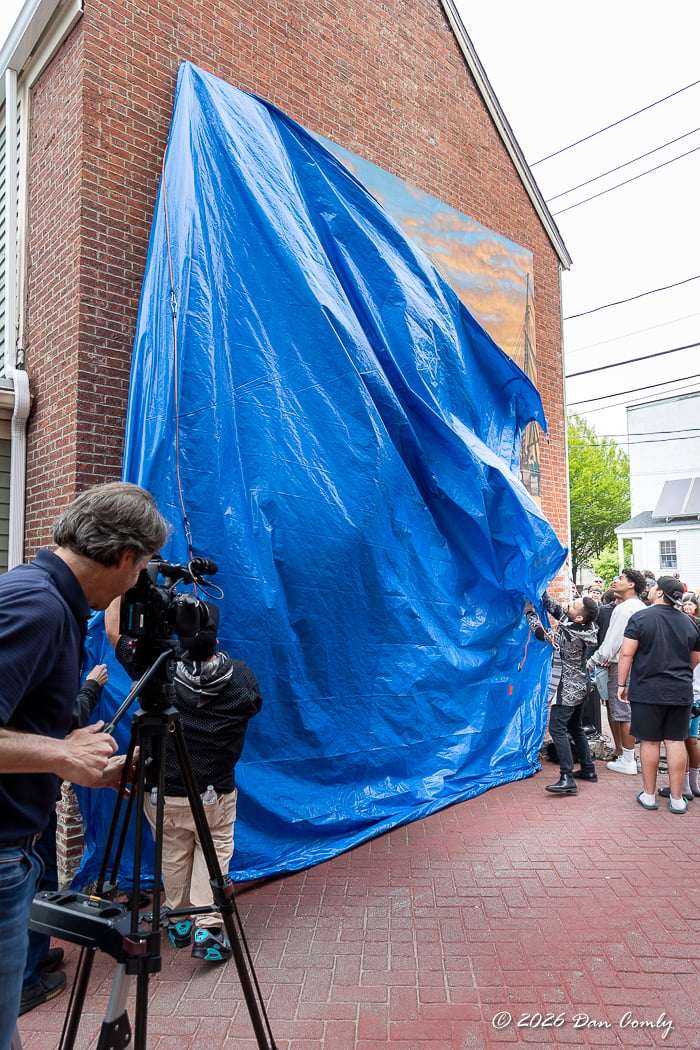
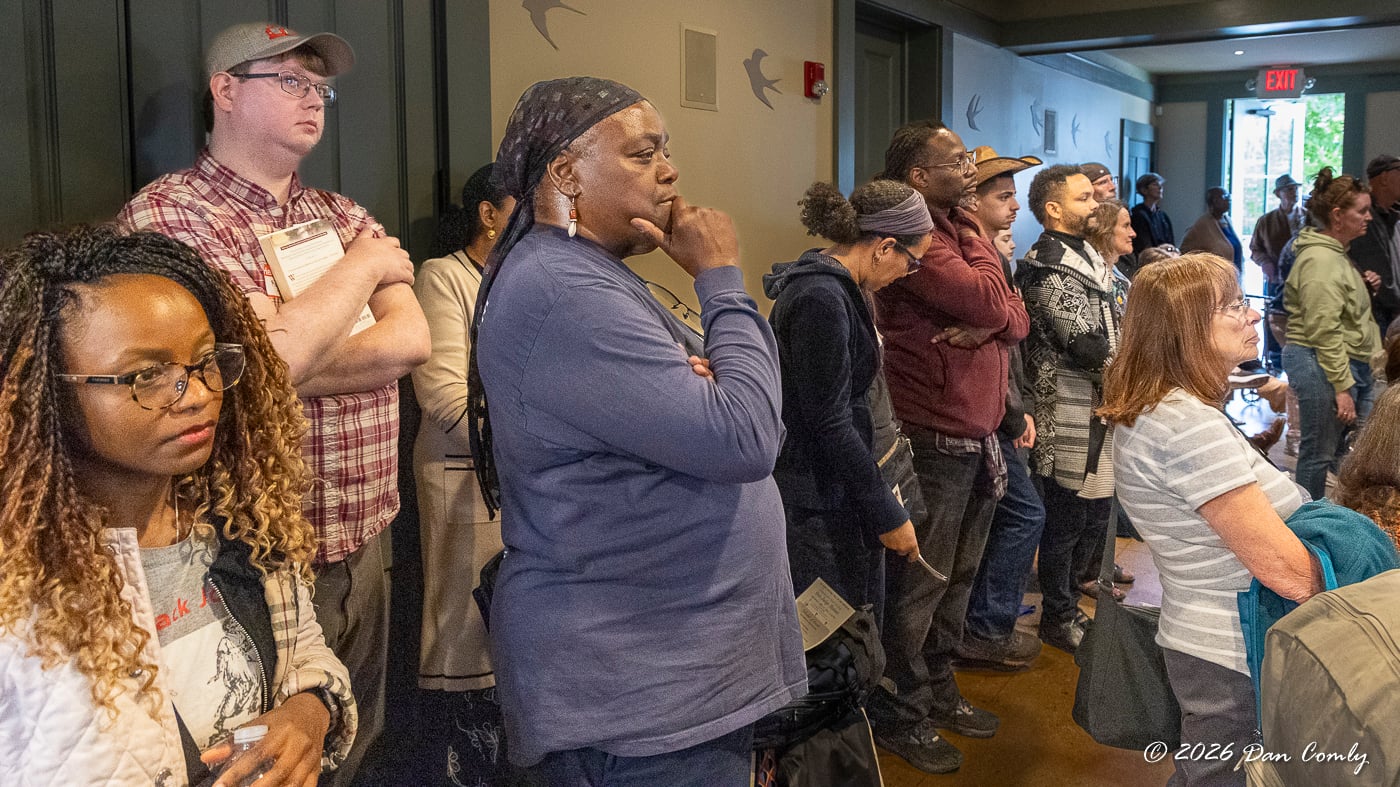
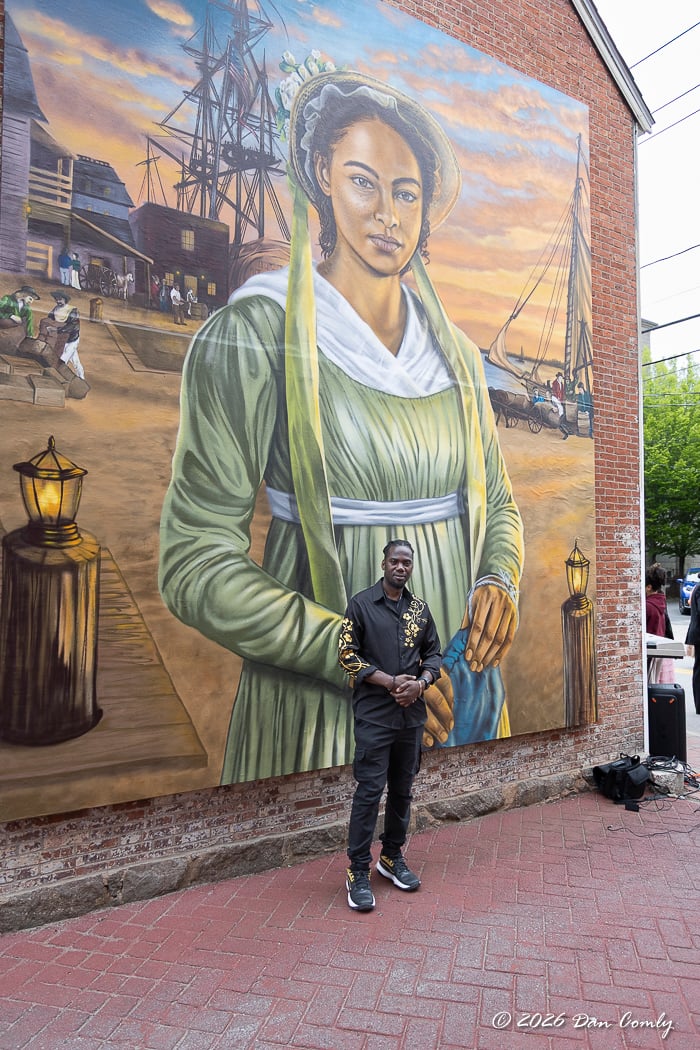
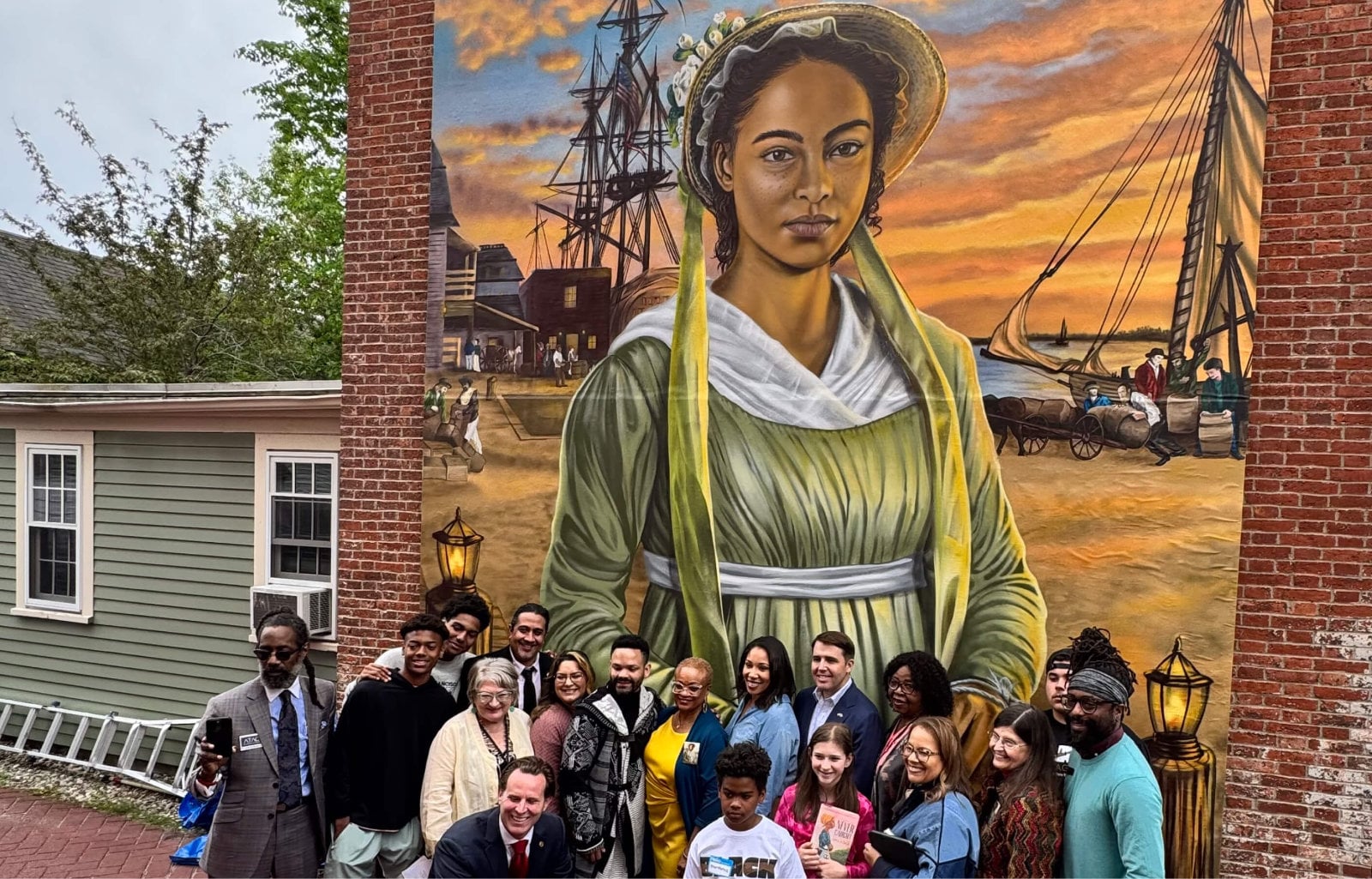
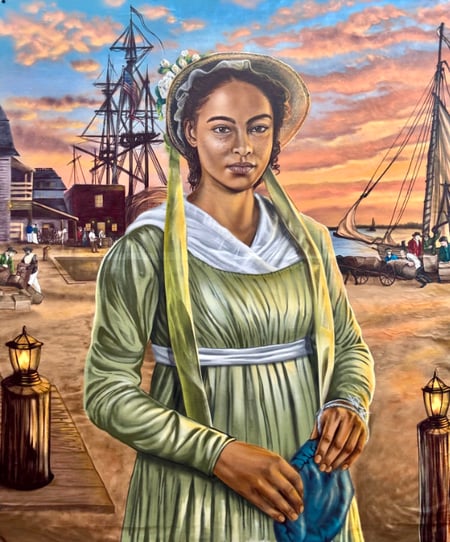
May 23rd, 2026 - the 230th anniversary of Ona’s escape to Portsmouth in 1796, we unveiled the Ona Judge Staines mural at BHTNH’s headquarters on 222 Court street. The ceremony celebrated her life as a freedom seeker, escaping enslavement by George and Martha Washington. The mural project started in 2023, as part of a local History Through Art initiative, The Trail worked with artist Manuel Ramirez of Positive Street Art to create the mural to honor Staines. Ona’s story is one of courage and self-determination. Take part in history by sharing this, and together we Bring Ona’s History Forward.

We provided period images, and the artist created a first sketch, then another, and then finally three options from which we could make our final choice.
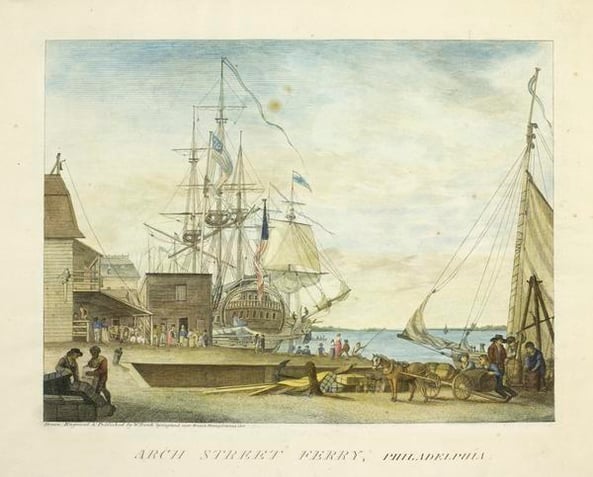 The background for the final three working sketches is taken from Thomas Birch's ca. 1795-97 print of Arch Street Wharf, Philadelphia, published by William Birch in 1800. This image accords closely with the appearance of portions of Portsmouth's waterfront at the same time, and accurately depicts ships, clothing, and dockside storage buildings of the period. Notice the diverse workforce and passengers ready to board a ferry similar to the one that connected Portsmouth to Kittery in the late 1700s.
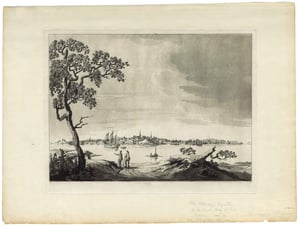
The print at the right is of Portsmouth Harbor in 1776 and was engraved by J.F.W. Des Barres after a drawing by Samuel Holland. Note that the wharves were spread out across the waterfront with one concentration in the South End on the left, and additional wharves in the more newly developed North End on the right. The port grew steadily in the late 1780s and 1790s as commerce recovered after the Revolution.
Putting together a project like this, when accuracy of historical details is paramount, demands extensive research. The team traveled to Historic New England's storage facility in Haverhill, MA, shortly after we obtained our zoning variance in February 2023. We looked at clothing, shoes, and portraits of the period, and combined that experience with photo research and consultation with historic costume expert Astrida Schaeffer. From the advertisement seeking Ona Judge's return, posted by the Washingtons, we know that Ona Judge, an accomplished seamstress, owned "many changes of very good clothes of all sorts," and would have been well and stylishly dressed when she arrived in Portsmouth.
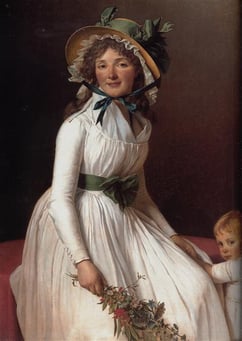
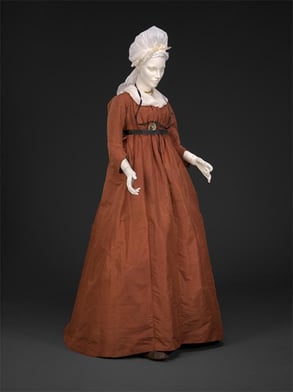
From left to right:
Jacques Louis David, Madame Pierrie Seriziat, France, ca. 1795. Detail.
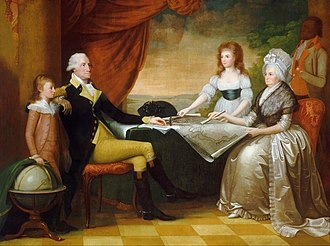
Edward Savage, The Washington Family, 1789-1796. National Gallery of Art, Washington, D.C. As seamstress to Martha Washington, Ona Judge would have been familiar with the latest styles. Savage painted this group portrait initially in 1789, but added the figure of Christopher Steels, enslaved servant to the President at the far right, and updated the children's clothing in 1796.
Round Gown, ca. 1795-96, owned by the National Museum of the Daughters of the American Revolution, Washington, D.C.
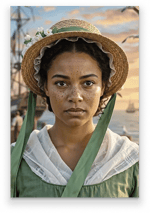
There are no life portraits or daguerreotypes of Ona Judge Staines (1773-1748). We have only the description of her that was printed in Claypoole's American Daily Advertiser on May 25, 1796: "Absconded ... on Saturday afternoon, Oney Judge, a light Mulatto girl, much freckled, with very black eyes, and bushy black hair-She is of middle stature, but slender and delicately made, about 20 years of age." Many artists have imagined what she might have looked like, and ours is yet another interpretation. The first image generated was done using Al prompts for the figure and her clothing. The artist, Manuel Ramirez, then did a line drawing of how the image would appear on the building, filling in the background to show Ona Judge on the Portsmouth waterfront immediately after her arrival. In February 2023, the Zoning Board of Adjustment approved our request to install the mural on the east façade of our building.
The historical details of setting and clothing had to be refined, and we asked one of our staff members, Dariya Steele, to be the model for the final image. Strawbery Banke Museum worked with us to adapt their reproduction clothing to dress Dariya for a photo session in the museum's hands-on immersive experience exhibition in the Walsh House. The photo shoot took place on a relatively warm day in late February 2025.
After our photo session at the Strawbery Banke Museum, the artist Manuel Ramirez created this image for our consideration. We requested corrections to the background as his draft included buildings and wharf details that were not appropriate to 1796. It was important that the smaller wharf buildings that were characteristic of Portsmouth at that time, and a single-masted coastal sloop of the type from which Ona Judge disembarked. The final background was derived from a print of one of Philadelphia's smaller wharves—one similar to those in Portsmouth at the same point in time.
In response to our comments, the artist sent three new concepts. We chose the center image above for several reasons. The advertisement seeking her return mentioned that Ona Judge had "many changes of good clothes of all sorts," and added that she would "endeavor to pass for a free woman." Here she wears a stylish but simple dress. In the 1700s, women did not travel or go out in public without their heads covered. We therefore chose the version in which she is wearing a bonnet with trailing ribbons and a matching bag: appropriate accessories for a free woman. The image was approved by the City's Public Art Review Committee in February 2025. The final mural was painted onto canvas and affixed to aluminum-clad panels using sprayed-on acrylic and sealed to protect it against weather damage.
Who is Ona Judge?
Born enslaved to George and Martha Washington at Mt. Vernon around 1773, Staines was the daughter of a Black enslaved woman and a white indentured servant. She spent her early life on a plantation in forced servitude as Martha’s personal slave. Because of her position, Staines accompanied the family when they traveled to New York and Philadelphia. The Washingtons carefully controlled the amount of time Judge spent in Pennsylvania to skirt a law that automatically emancipated any enslaved person who stayed in the state for six months or longer.
On May 21, 1796, at the age of twenty-two, Staines slipped out of the family’s Philadelphia residence. She had learned Martha Washington was going to give her as a gift to her eldest granddaughter, who was known to be abusive. Staines escaped with the help of members of Philadelphia’s free Black community, with whom she had built relationships during earlier visits. She hid on a boat destined for Portsmouth.
Infuriated by her escape and worried it would inspire others whom he had enslaved to do the same, George Washington went to great lengths to try to capture Staines and bring her back to Virginia. He failed every time. Staines spent the rest of her life as a free woman in New Hampshire, where she married and had three children.
There are many ways to learn more about Judge’s inspiring story. The most comprehensive account of her journey is detailed in Erica Armstrong Dunbar’s Never Caught: The Washington’s Relentless Pursuit of their Runaway Slave.
 Preserve Black History in New Hampshire