16th Annual Black New England Conference:
Where the Money Resides: An Exploration of Racialized Access & Historic Exclusion from Wealth
Southern New Hampshire University, Manchester, NH
October 21-22, 2022
#BNEC2022
Conference Extras
CONFERENCE TOUR #1
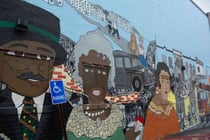 The Changing Faces of Manchester: Black Entrepreneurship Then and Now
Thursday, October 20 | 3:30 PM | Bus Tour | Cost $45
Tour Guide: Anthony Poore
In response to the constraints of racism and a history of enslavement, African Americans and other people of color have built a tradition of overcoming obstacles and employing creative strategies to make a living, develop businesses, and succeed.
This tour focuses on Manchester’s enterprising African Americans who, from the early 1800s, established businesses from barbershops to dry cleaners to the multicultural shops of today. We will also highlight some of New Hampshire’s first entrepreneurs, descendants from an African culture of great traders, merchants, and craftsmen.
Tour meets at the Currier Museum. Tour cost includes a casual dinner at the Hop Knot, a Black-Owned eating establishment.
CONFERENCE TOUR #2 Climate-Smart Farming Practices: Farmers of Color Tour and Discussion
Thursday, October 20 | 10:00 AM – 2:00 PM | Concord, NH | Suggested Donation
Join New England Farmers of Color for a tour of the farm, meet with farmers, learn about conservation practices, share a meal, and engage in discussion about the opportunities and benefits of climate-smart agriculture to a resilient local and regional food system. Expand your Knowledge of Climate-Smart Farming Techniques and network with producers who are implementing soil health practices, cover crops, water catchment and conservation systems, high tunnels, and more. The Farm Tour will take place from 10:00 AM – 12 PM and will be followed by Lunch. After lunch, engage in a facilitated discussion with Farmers of Color across New England to build community and learn from one another.
The event was part of a USDA Natural Resources Conservation Service Racial Equity Cooperative Agreement.
CONFERENCE TOUR #3
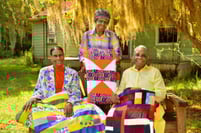 Black Creativity On Display at the Currier
Thursday, October 20 | 2:00 – 3:00 PM | Museum Tour | Cost: Free | Registration Required
Museum Guide: Rachel Kane
Join us for a private viewing and conversation with museum educator Rachel Kane about two African American exhibits now on display at the Currier Museum in Manchester, NH.
The Gee’s Bend Quilts exhibit features five recently acquired-contemporary quilts made by African American women who live in a remote area of Alabama. The quilts are part of an intergenerational, community-wide tradition passed down by ancestors enslaved on local plantations since 1813. The artists’ abstract designs and found fabrics break the mold of better-known quilting traditions to produce pieces that embody resilience, persistence, strength, and joy. All this is achieved in the face of mixed results that government aid brought to the community during the Depression and how Gee’s Bend quilters were rarely fairly compensated for their work which hangs in museums nationwide.
Memoirs of a Ghost Girlhood: A Black Girl’s Windowby Alexandria Smith, visual artist, and a composition //windowed//by Liz Gre create an immersive environment to explore Black identity – especially that of Black girls and their dreams.
Tour meets BHTNH representative Suzanne Paquin at the entrance to the Currier Museum.
CONFERENCE SCHEDULE
Friday, October 21, 2022
VIRTUAL AND IN-PERSON PRESENTATIONS
OPENING CEREMONY
9:00 – 9:10 AM
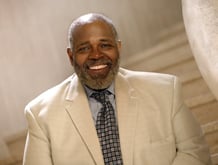
WELCOME, OPENING REMARKS, AND SONG
Rev. Robert Thompson
In The Beginning
The Hero's Journey is an archetypal story pattern, common in ancient myths as well as modern-day adventures. The journey can be boiled down to three stages: first, travelers leave the familiar world behind, then they learn to navigate the unfamiliar world of their adventure, and finally, they return to the familiar world transformed.
This ceremony is the beginning of our journey as we travel through this learning experience.
9:10 – 10:20 AM
Panel #1 In Honor of Paul Cuffe
THE RISE AND FALL OF ENSLAVED AND FREE BLACKS OF AFFLUENCE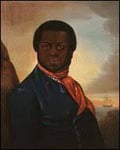 The Trans-Atlantic Slave Trade allowed for the massive accumulation of wealth in Europe and the Americas. Stolen labor, trading in human bondage, insurance claims on "lost" cargo, and reparations for slave owners after emancipation entrenched America’s financial systems. But what of the economic potential of the enslaved or free Blacks? This panel will introduce some of the African Americans who were able to accumulate wealth despite enslavement and the aftermath of Reconstruction.
Panelists
Marcus Nevius, Associate Professor of History, University of Rhode Island, South Kingstown, RI "Tracing Clandestine Informal Economy in Slavery's Primary Records"
Karlos Hill, Associate Professor and Chair of the Clara Luper Department of African-American Studies, University of Oklahoma, Norman, OK "The 1921 Tulsa Race Massacre: A Photographic History"
Najee Brown, Founder Theatre for the People, Eliot, ME "The Historical Role Black Theatre Plays in Building Wealth in Community"
Moderator
Sen. David Watters, New Hampshire State Senator & Professor Emeritus Dept. English, University of New Hampshire, Durham, NH
Watch Recording Here
10:35 – 11:50
PANEL #2, In Honor of Sarah Rector
BY DECREE: LAWS AND THE SYSTEMIC BARRIERS TO THE ACQUISITION OF WEALTH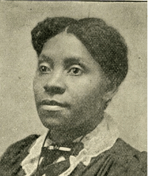 Often, wealth, land, and property are passed down through generations, effectively giving each subsequent generation more of an advantage. However, for many African Americans, explicit government policies dramatically reduce their earning potential and ability to acquire wealth. For this panel, presenters will explore how federal, state, and local governments have enacted laws and policies that have had a profound and lasting impact on Black families’ ability to accumulate wealth.
Panelists
Richard Rothstein, Author, Distinguished Fellow the Economic Policy Institute, Washington, DC & Co-author, Leah Rothstein "Color of Law: A Forgotten History of How Our Government Segregated America"
Karen A. Spiller, Professor in Sustainability Food Systems, UNH, Durham, NH "Black Wealth: What Does Land Have To Do With It?"
Moderator
Shelley Walcott, Media Specialist and Former Anchor WMUR-TV, Manchester, NH.
Watch Recording Here
12:30PM
Lunchtime Keynote Featuring
Mehrsa Baradaran
 When the Emancipation Proclamation was signed in 1863, the Black community owned less than one percent of the United States’ total wealth. More than 150 years later, that number has barely budged.
The Color of Money pursues the persistence of this racial wealth gap by focusing on the generators of wealth in the black community: Black banks. Studying these institutions over time, Mehrsa Baradaran challenges the myth that Black communities could ever accumulate wealth in a segregated economy. Instead, housing segregation, racism, and Jim Crow credit policies created inescapably, but hard-to-detect, an economic trap for Black communities and their banks.
Baradaran challenges the long-standing notion that Black banking and community self-help are the solutions to the racial wealth gap. These initiatives have functioned as a potent political decoy to avoid more fundamental reforms and racial redress. Examining the fruits of past policies and the operation of banking in a segregated economy, she makes clear that only bolder, more realistic views of banking’s relation to Black communities will end the cycle of poverty and promote Black wealth.
Watch Recording Here
1:40 – 3:00 PM
PANEL #3, In Honor of J. Hamilton
THE MYTH OF BLACK EXCEPTIONALISM: PATHS TO BLACK ECONOMIC POWER
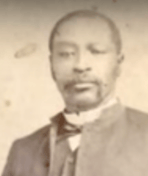 There is a long history of Black people building prosperity and wealth that is often unknown or misunderstood. The Greenwood neighborhood in Tulsa was a thriving Black neighborhood having earned the nickname, “Black Wall Street” because of the high concentration of prosperous, African-American-owned businesses. But this is just one of many examples where ingenuity, persistence, hard work, and self-reliance brought prosperity to Black individuals and communities. In this panel, we will hear about different and, at times divergent, paths to economic power – and consider the obstacles and challenges encountered along the way. We will learn that these successes were not limited to a few “exceptional” individuals or communities – but were far more prevalent than is commonly recognized
Panelists
Ray Diamond, Alumni Professor, Louisiana State Law Center, Baton Rouge, LA "Black Conservatism, Black Radicalism, and False Dichotomy: Paths to Black Economic Power"
Renel Domond, Owner of Juice Kings, Stamford, CT "Masks of Formerly Incarcerated Individuals and a Path Forward"
Marlene Kim, Professor of Economics, University of Massachusetts, Boston, MA, "Racialized Access and Historic Exclusion: Asians, Violence, and Resilience in America"
Moderator
Chris Matthews, Associate Professor of Business Administration & Management Southern New Hampshire University, Manchester NH
Watch Recording Here
6:00 P.M. – 9:00 P.M.
AWARDS DINNER & KEYNOTE ADDRESS
A CONVERSATION WITH PROFESSOR IBRAM X. KENDI
In Dialogue With Dr. Reginald Wilburn 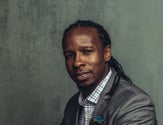 Ibram X. Kendi author, activist, and MacArthur Fellow believes that simply being “not racist” is not enough. Instead, the nation’s history of inequality must be acknowledged, and active steps must be taken to dismantle the foundation that has allowed it to continue for generations.
“It's radical to live in a nation where there is widespread racial inequity and to think that the inequities are the result of a particular racial group being inferior,” Kendi said, “It's radical to not recognize the actual policies and practices behind those disparities, and then allow those disparities to persist. Black people don't have less on average wealth because there's something wrong with Black people.”
Dr. Kendi is the author of many highly acclaimed books including Stamped from the Beginning: The Definitive History of Racist Ideas in America, which won the National Book Award for Nonfiction, making him the youngest-ever winner of that award. He has also produced five straight #1 New York Times bestsellers, including How to Be an Antiracist, Antiracist Baby, and Stamped: Racism, Antiracism, and You, co-authored by Jason Reynolds.
In 2020, Time magazine named Dr. Kendi one of the 100 most influential people in the world. He was awarded a 2021 MacArthur Fellowship, popularly known as the Genius Grant. His next two books, coming out in June, are How to Raise an Antiracist and the picture book, Goodnight Racism.
2022 CONFERENCE SCHEDULE, DAY #2
SATURDAY, OCTOBER 21, 2023
VIRTUAL & IN-PERSON PRESENTATIONS
9:05 – 10:15 AM
PANEL #4, In Honor of Rosary Cooper
WEALTH MATTERS IN BLACK & WHITE
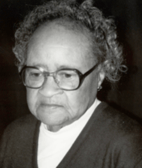 Far too often, embedded structural racism has stymied the efforts of entrepreneurial and talented African Americans to achieve economic success. The panelists will consider how institutional disparities and access to education, employment, healthcare, and financing, all have an impact on achieving success and building wealth. Additionally, panelists will explore how the school-to-prison pipeline has affected community wealth. We will also discuss what needs to change to remove these barriers, level the playing field, and promote equal access to economic prosperity.
Panelists
Daniel Fontenot, Director, ProWlydSolutions LLC, Baton Rouge, LA "Racial Disparities in America's Ecology"
Stephanie Harvey, 2nd Year PhD Student, University of New Hampshire, Durham, NH "A Study of the Racial Wealth and Achievement Gaps in the Field of Education"
Melanie Haas, Dean of General Studies, Southeast Arkansas College & Joel Haas, Graduate Student, Southern New Hampshire University, Manchester, NH "The 13th Amendment: How the United States (un)Abolished Slavery and Enforces Black Poverty"
Nicole Sublette, Licensed Mental Health Clinician, New Hampshire "The Myth of Meritocracy: How this Micro-aggression Limits Black Access to Wealth and Health"
Moderator
Melina Hill Walker, Program Director, Endowment for Health, Concord NH
Watch Recording Here
10:30 – 11:45 AM
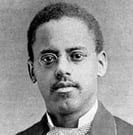
PANEL #5 In Honor of Lewis Latimer
A GENEROUS SPIRIT: BLACK PHILANTHROPY
 10:30 – 11:45 AM
PANEL #5 In Honor of Lewis Latimer
A GENEROUS SPIRIT: BLACK PHILANTHROPY
Philanthropy has long been embedded in the African American tradition. In order to survive segregation and the Jim Crow era, Black Americans gave through community churches, social and fraternal organizations, educational institutions, and mutual aid societies. Black philanthropy was integral to the development of Black schools, banks, and businesses. For this panel, presenters will discuss the rate and pattern of African American giving outside of the traditional foundation models.
Panelists
Bithia Carter, President & CEO, Blacks in Philanthropy, Boston MA "Giving Black: The Legacy of US"
Dennis Creary, President & CEO, Blacks on Wall Street, Inc. New York, NY "Giving Black: Charity Within Our Communities"
Wendy McNeil, Major Gifts Officer, PBS, New Jersey "Life as a Black Fundraiser"
Richard Ober, President & CEO, New Hampshire Charitable Foundation, Concord, NH
Moderator
Kenneth Holmes, Senior Vice Provost of Student Life, University of New Hampshire, Durham NH
Watch Recording Here
12:00 – 1:00 P.M.
LUNCHTIME KEYNOTE EVENT - Racism's Receipts: The True Price of Prejudice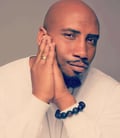 Bigotry costs us more than just pain, suffering, and our lives. It also costs us the very wealth necessary to participate in the American Dream. Theo E.J. Wilson's groundbreaking talk analyzes the dollars and cents behind anti-Blackness in America.
Theo Wilson began his speaking career in the N.A.A.C.P. at the age of 15 and has always had a passion for social justice. Theo is the Executive Director of Shop Talk Live, Inc., an organization that uses the barbershop as a staging ground for community dialogue and healing. In 2017, his TED Talk entitled, A Black Man Goes Undercover in the Alt-Right, was seen worldwide, amassing a total of over 17 million views.
Theo is the host of The History Channel’s hit series, “I Was There.” He has been featured on Good Morning America, BuzzFeed, CNN, Good Day Canada, and TV One.
Watch Recording Here
1:40 – 2:45 PM
PANEL #6, In Honor of Richard Potter
ECONOMIC POWER, BLACK ENTREPRENEURSHIP, AND THE NEW VIRTUAL ECONOMY
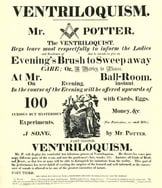 For the last three decades, according to various researchers, the rate of new business formation has been on a steady decline in the U.S. More recently, a report from Babson College’s Global Entrepreneurship Monitor found that Black business owners are creating businesses at twice the rate of their white counterparts. This panel will explore the history of Black Entrepreneurship and the new business models African Americans are creating.
Panelists
Andrea Williamson, Financial Advisor, Edward Jones, Kennebunk Maine "The Future of Finance for Black Americans: Concepts, Ideas and Next Level Thinking"
Wheeler del Torro, Author, Nutritional Anthropologist, Boston, MA "Drawing on Collective Wisdom: Lessons Every Black Entrepreneur Should Know"
Kaira Carter-Taylor, Adjunct Professor at Southern New Hampshire University, Manchester NH "Business Owners and Global Competence in E-business"
Moderator
Dottie Morris, Associate Vice President for Institutional Diversity & Equity, Keene State College, Keene NH
Watch Recording Here
3:00 P.M.
CLOSING REMARKS & A PERFORMANCE Theater for the People Presents
Transcending: The Black Effect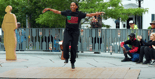 Transcending: The Black Effect is a high-energy performance piece that takes the audience on a musical journey to demonstrate how Black folks found creative ways to use music and dance for self-expression and joy even in times of want.
This performance features an intergenerational dance team, musicians, and poets.
2022 BHTNH Citizen of the Year
Jay Williams, President and CEO, Hartford Foundation for Public Giving
Since July 2017, Jay Williams has served as president of the Hartford Foundation. He is currently leading the Foundation’s commitment to dismantle structural racism, achieve equity and improve social and economic mobility in our region in partnership with nonprofit organizations
and community stakeholders. Williams serves on the boards of the MetroHartford Alliance, and AdvanceCT, and is a member of the Governor’s Workforce Council. At the national level, he is a member of the Community Foundation Opportunity Network, and serves on the boards of the Council on Foundations, and the Center for Community Progress.
Prior to coming to the Hartford Foundation, Williams served as U.S. Assistant Secretary of Commerce for Economic Development where he led the federal economic development agenda for the United States during the Obama administration. He also served as Deputy Director of the Office of Intergovernmental Affairs at the White House, acting as the principal liaison between the President of the United States and local elected officials. Previously, Williams served as the executive director of the federal Office of Recovery for Auto Communities and Workers. He arrived in Washington, DC, after serving as the Mayor of the City of Youngstown, Ohio, where he helped lead regional economic development initiatives to improve the city’s global competitiveness. Williams, who grew up in Youngstown, led the city’s Community Development Agency before becoming the city’s youngest mayor and first African American elected to that office.
We are proud to present our Citizen of the Year, Jay Williams